
 Image 1 of 1
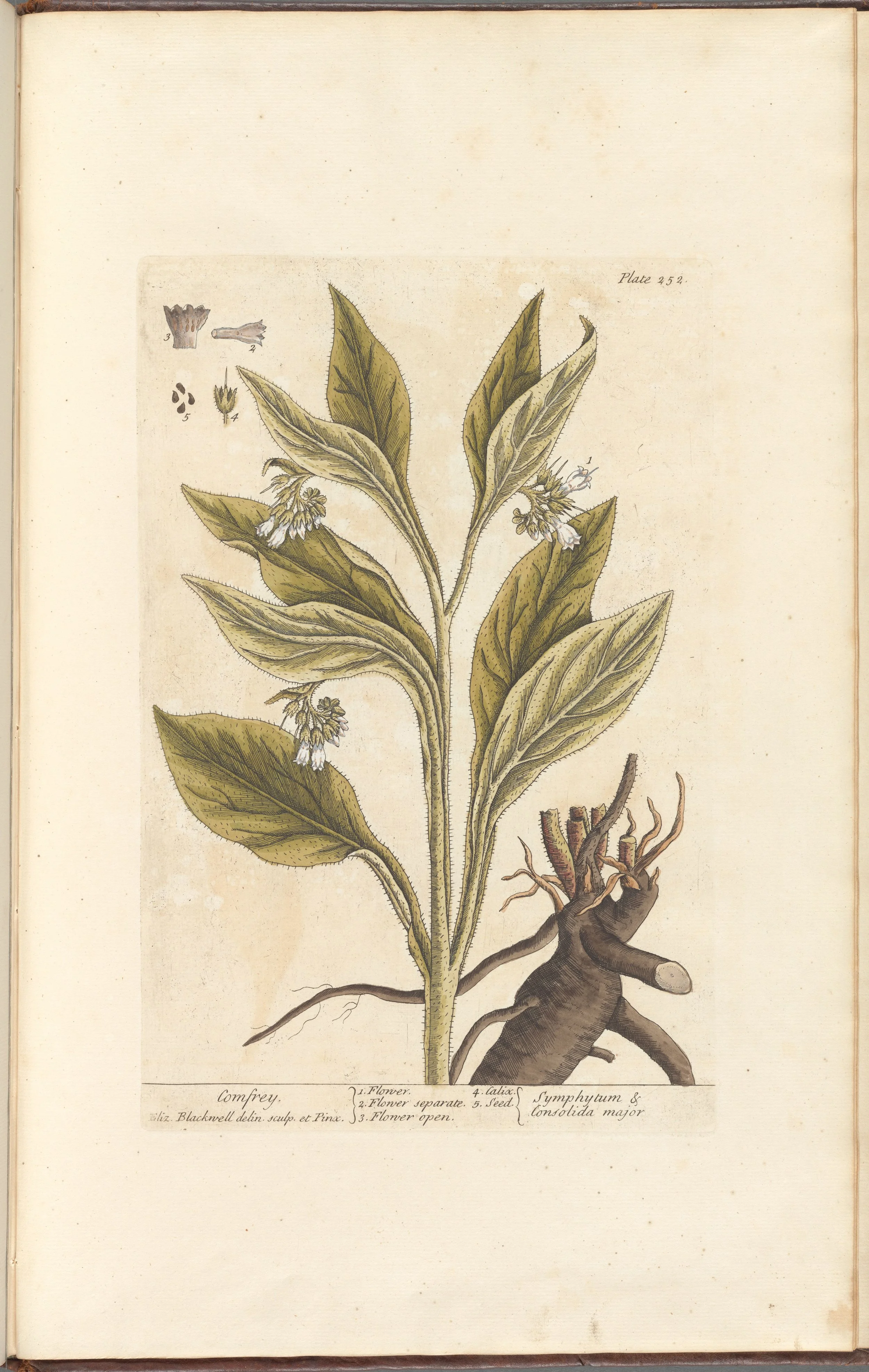
Botanical Name: Symphytum officinale
Common Names: Comfrey Root, Knitbone, Boneset Herb, Blackwort, Slippery Root
Origin: Europe & Western Asia (now cultivated worldwide)
Comfrey Root is the thick, dark root of Symphytum officinale, a perennial herb that has been valued for centuries in traditional herbalism and folk practices. Renowned for its deep roots and vigorous growth, Comfrey has long symbolized healing, resilience, protection, and abundance. Its common name, Knitbone, reflects its historic association with mending and restoration, making it one of the most respected herbs in traditional apothecaries.
In folk magic and traditional spiritual practices, Comfrey Root is closely associated with protection, safe travel, prosperity, stability, healing, and good fortune. It is commonly carried in mojo bags, placed in luggage or vehicles for travel protection, incorporated into spell jars, and used in prosperity workings intended to attract financial security and encourage steady growth. Many practitioners also include Comfrey Root in rituals focused on recovery, renewal, and strengthening both physical and spiritual foundations.
Throughout history, Comfrey has remained a staple herb in European folk traditions, Appalachian folk magic, and Hoodoo. Its enduring symbolism of restoration and protection continues to make it a favorite among herbalists, artisans, and practitioners of traditional spiritual practices.
Element: Earth
Planet: Saturn
Gender: Feminine
Protection
Safe Travel
Prosperity
Healing
Stability
Resilience
Good Fortune
Renewal
Abundance
Protection mojo bags
Safe travel charms
Spell jars
Prosperity rituals
Altar offerings
Candle dressing
House blessings
Grounding rituals
Money-drawing workings
Comfrey has been cultivated since ancient Greece and Rome, where it was prized for its traditional herbal uses and symbolic connection to healing and restoration. Throughout medieval Europe, travelers often carried Comfrey Root for protection during long journeys, believing it would help ensure a safe return home. In Appalachian folk magic and Hoodoo traditions, the root became associated with prosperity and protection, frequently placed in charm bags, cash boxes, or carried as a talisman to attract financial stability and guard against misfortune. Its reputation as an herb of endurance and renewal has endured for generations.
For educational, crafting, aromatic, and traditional spiritual use. Not intended for internal consumption. Comfrey contains pyrrolizidine alkaloids, which may cause serious liver damage if ingested. Avoid use during pregnancy or while nursing. Keep out of reach of children and pets. Store in a cool, dry place away from direct sunlight.