
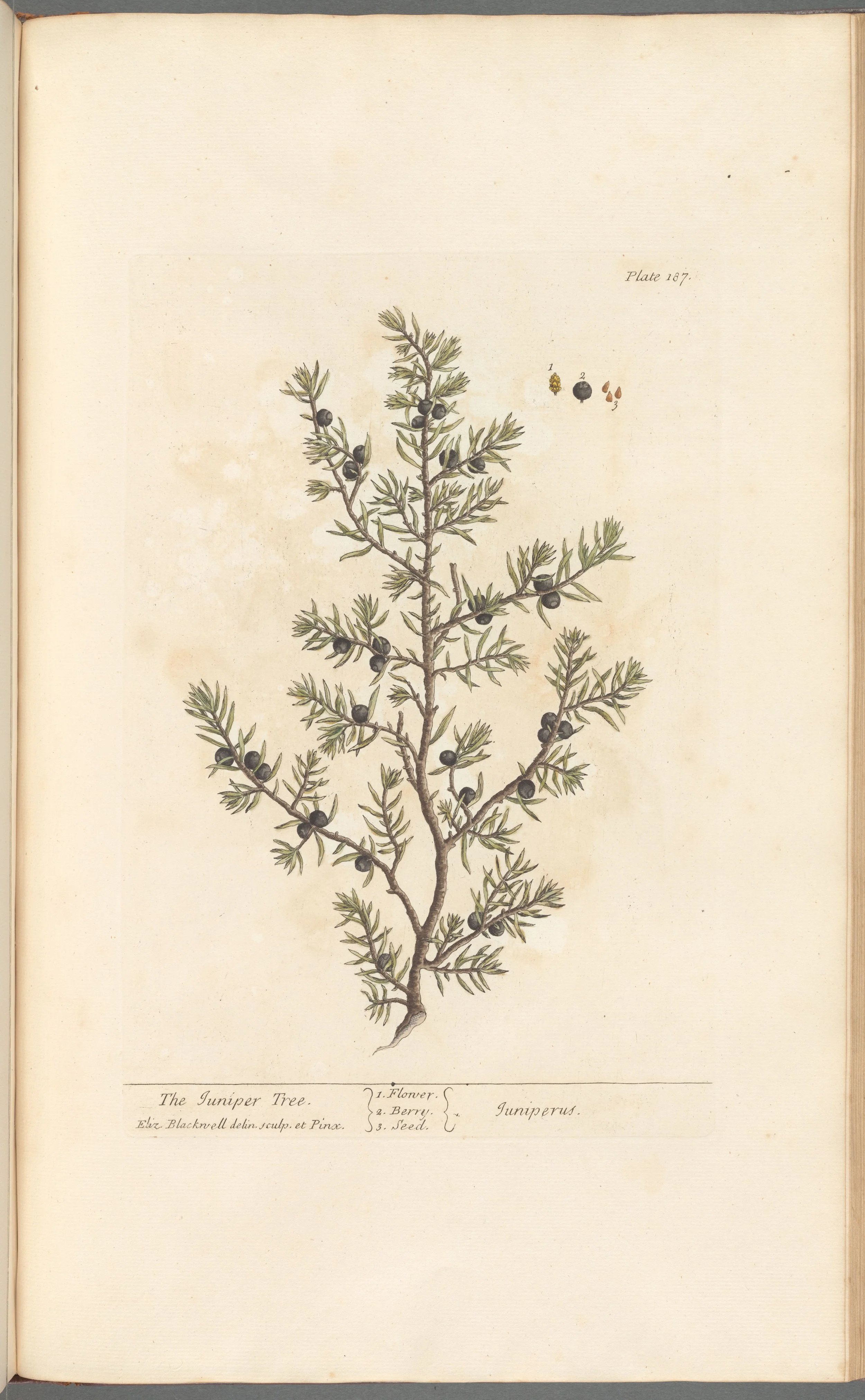
 Image 1 of 1
Botanical Name: Juniperus communis
Common Names: Juniper Berries, Common Juniper, Juniper Fruit, Juniper Cones
Origin: Europe, Asia & North America
Juniper Berries are the aromatic, blue-black seed cones of Juniperus communis, an evergreen shrub that has been revered for centuries in traditional herbalism, culinary arts, and spiritual practices. Despite their common name, juniper "berries" are technically fleshy seed cones that develop over two to three years. Their crisp, resinous aroma with notes of pine and citrus has made them a valued botanical in incense, purification rituals, and protective traditions throughout the world.
In folk magic and traditional spiritual practices, Juniper Berries are closely associated with protection, purification, healing, prosperity, longevity, and banishing negativity. They are commonly burned as incense, carried in charm bags, incorporated into spell jars, hung near entrances, or used in ritual baths to cleanse unwanted energy, safeguard the home, and strengthen spiritual boundaries. Many practitioners also burn Juniper during house blessings and seasonal rituals to invite peace and fresh beginnings.
Throughout history, Juniper has remained one of the most respected protective plants in European, Native American, and Appalachian folk traditions. Its fragrant berries continue to be treasured by herbalists, artisans, and practitioners of traditional folk magic for their enduring symbolism of cleansing, resilience, and spiritual protection.
Element: Fire
Planet: Sun
Gender: Masculine
Protection
Purification
Healing
Prosperity
Banishing Negativity
Longevity
Peace
Strength
New Beginnings
Ritual incense
Spell jars
Protection charm bags
House blessings
Ritual baths
Altar offerings
Candle dressing
Space cleansing
Prosperity rituals
Juniper has been considered a sacred and protective plant across many cultures for thousands of years. In ancient Europe, its branches and berries were burned to cleanse homes, temples, and livestock from harmful influences. Celtic and Norse traditions regarded Juniper as a guardian against evil spirits, while many Native American peoples used its fragrant smoke in purification ceremonies and blessings. Throughout Appalachian folk magic and Hoodoo, Juniper Berries became valued for protection, cleansing, and creating a spiritually safe environment, preserving their reputation as one of nature's foremost protective botanicals.
For educational, crafting, aromatic, culinary, and traditional spiritual use. Consult a qualified healthcare professional before consuming herbal products, particularly if pregnant, nursing, taking medications, or managing a medical condition. Avoid excessive consumption, particularly during pregnancy or in individuals with kidney disorders. Keep out of reach of children and pets. Store in a cool, dry place away from direct sunlight.