
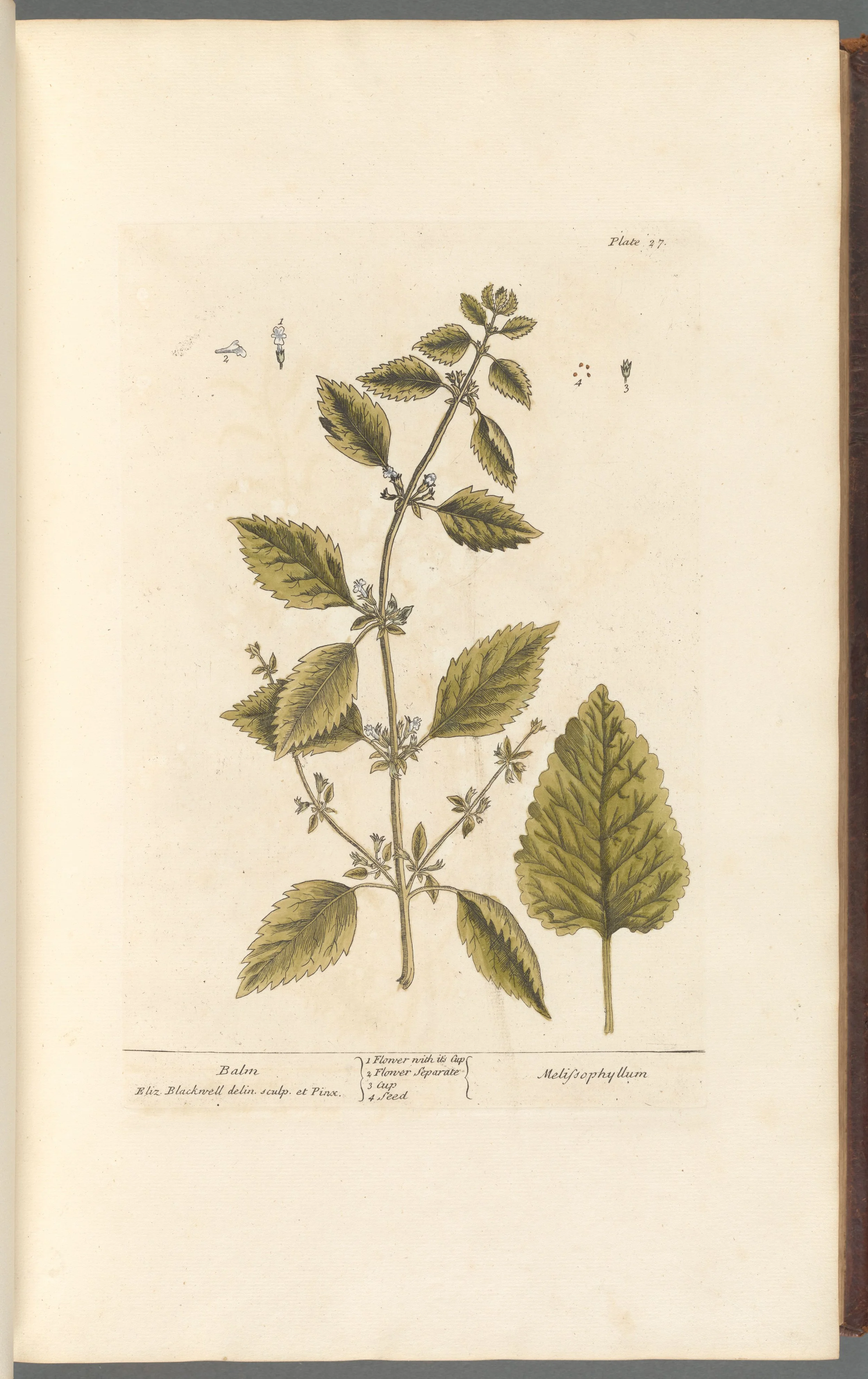
 Image 1 of 1
Lemon Balm
Botanical Name: Melissa officinalis
Common Names: Lemon Balm, Balm, Sweet Balm, Melissa, Bee Balm*
*Note: "Bee Balm" is also commonly used for plants in the genus Monarda*, so "Melissa" is often preferred to avoid confusion.*
Origin: Southern Europe, the Mediterranean & Western Asia
Description
Lemon Balm is a fragrant perennial herb belonging to the mint family (Lamiaceae), cherished for its bright lemon aroma, heart-shaped leaves, and long history in traditional herbalism. Native to the Mediterranean region, it has been cultivated for over 2,000 years in monastery gardens, apothecaries, and home herb gardens. The plant's botanical name, Melissa, is derived from the Greek word for "honeybee," reflecting its long-standing reputation as a favorite nectar source for bees.
In folk magic and traditional spiritual practices, Lemon Balm is closely associated with love, healing, happiness, peace, and emotional renewal. It is commonly incorporated into ritual baths, dream pillows, blessing sachets, incense blends, and spell jars intended to promote inner peace, strengthen friendships, encourage compassion, and attract joy. Many practitioners also use Lemon Balm in rituals focused on relieving emotional burdens, encouraging optimism, and creating a harmonious atmosphere within the home.
Throughout history, Lemon Balm has symbolized comfort, hope, and heartfelt connection. Medieval monks cultivated the herb in monastery gardens, while European folk traditions regarded it as a plant of longevity, hospitality, and cheerful spirits. Today, Lemon Balm remains one of the most beloved botanicals among herbalists, gardeners, and practitioners of traditional folk magic for its gentle fragrance, rich history, and enduring symbolism of peace and happiness.
Magical Correspondences
Element: Water
Planet: Moon
Gender: Feminine
Traditionally Associated With
Peace
Love
Healing
Happiness
Emotional Balance
Friendship
Compassion
Joy
Common Uses
Ritual baths
Dream pillows
Blessing sachets
Ritual incense
Candle dressing
Spell jars
Altar offerings
House blessings
Folklore & History
Lemon Balm has been cultivated since ancient Greece and Rome, where it was admired for its pleasant fragrance and association with bees, abundance, and well-being. During the Middle Ages, it became a treasured herb in monastery gardens throughout Europe and was often planted near homes to encourage happiness and welcome guests. In European folk traditions, Lemon Balm was believed to lift the spirit, strengthen friendships, and promote peace within the household. Its connection to honeybees also made it a symbol of harmony, cooperation, and prosperity.
Precautions
For educational, crafting, culinary, aromatic, and traditional spiritual use. Consult a qualified healthcare professional before consuming herbal products, particularly if pregnant, nursing, taking medications, or managing a medical condition. Individuals with thyroid conditions or those taking medications that affect thyroid function should seek medical advice before using Lemon Balm internally. Keep out of reach of children and pets. Store in a cool, dry place away from direct sunlight.